
Most investors assume a stock notification system is just a price alert. You set a number, the stock hits it, you get a text. Done. That framing misses most of what these tools actually do. A well-configured stock alert system monitors dozens of signals at once — price moves, volume spikes, earnings events, breaking news, and even balance sheet changes that hint at major announcements before they go public. Understanding how these systems really work changes how you use them. And that change can make a real difference in how fast and how confidently you act on market information.
Table of Contents
- Key takeaways
- What is a stock notification system and how does it work
- Types of stock alerts and how to use them
- Benefits of stock notifications for traders and investors
- How to set up stock notifications effectively
- Comparing stock monitoring tools and platforms
- My take on stock alerts as a research tool
- Start getting smarter alerts with Ai-stockscout
- FAQ
Key takeaways
| Point | Details |
|---|---|
| More than price alerts | Stock notification systems track news, volume, financials, and chart setups, not just price thresholds. |
| Real-time delivery matters | Alerts fire instantly when conditions are met, giving you early awareness before a move accelerates. |
| Alert fatigue is real | Setting too many alerts reduces focus; use tiered filters to keep only the signals that matter. |
| Alerts are research tools | Notifications direct your attention toward what deserves closer review, not toward buy or sell actions. |
| Customization drives value | Aligning alert types with your specific investment goals is what separates useful signals from noise. |
What is a stock notification system and how does it work
A stock notification system is an automated monitoring tool that watches your selected stocks or watchlists and sends you an alert the moment a defined condition is met. That condition could be a price crossing a threshold, a volume spike above average, an earnings report dropping, or a news headline mentioning a company you follow.
The system has three core components working together. First, you set your preferences: which stocks to watch, what events matter to you, and how significant a move needs to be before you hear about it. Second, the system pulls data from live market feeds, news aggregators, and financial data sources. Third, it delivers the alert through your chosen channel. Notifications fire via push, email, or SMS, depending on what you've configured.
What separates a stock notification system from a simple price alert app is the breadth of triggers it can handle. Price alerting systems notify investors instantly when a ticker crosses a user-defined level. But modern systems go further. They track technical setups, insider filings, congressional trades, dark pool activity, and financial metric changes that often precede bigger moves.
One useful contrast: in e-commerce, back-in-stock notifications alert shoppers when a sold-out product returns to inventory. The underlying mechanic is similar — an automated trigger fires when a condition changes. But for investors, the data sources are far more complex, and the stakes are higher. Speed and precision matter more than they do in retail.
Pro Tip: If you're new to stock tracking alerts, start by configuring alerts on just three to five stocks you already know well. Learning how a system behaves on familiar names helps you calibrate sensitivity before expanding your watchlist.
Types of stock alerts and how to use them
The real power of a stock notification system shows up in its alert types. Most traders start with price alerts and stop there. That's a mistake. Here's what you can actually track:
- Price threshold alerts fire when a stock crosses a specific dollar level or moves by a defined percentage within a session.
- Volume alerts trigger when trading volume exceeds a normal range, which often signals institutional activity before price reacts.
- Technical setup alerts notify you when a chart pattern completes — like a breakout above resistance or a moving average crossover.
- Earnings and event alerts tell you when a company reports results, issues guidance, or schedules a material announcement.
- News alerts surface breaking headlines tied to your watched tickers.
- Financial signal alerts track balance sheet changes, dividend signals, and cash growth metrics that can hint at upcoming announcements.
That last category is where the real edge lives. Custom filters can detect early financial signals like cash growth before public announcements, giving attentive investors a window of awareness that the broader market hasn't acted on yet.
Most good systems also let you tier alert importance. The labels vary by platform, but the logic is consistent: major, noteworthy, and minor levels let you filter signal noise and keep your attention focused on moves that actually deserve it.
| Alert type | Best for | Example trigger |
|---|---|---|
| Price threshold | Breakout traders, stop watchers | Stock crosses $150 or drops 5% in a day |
| Volume spike | Early institutional detection | Volume 3x above 30-day average |
| Earnings event | Swing traders, long-term holders | Company reports after market close |
| Financial signal | Dividend investors, fundamentals | Cash reserves grow 20% quarter over quarter |
| Breaking news | Event-driven traders | CEO resignation, merger announcement |
Pro Tip: Use tiered alert levels rather than one-size-fits-all thresholds. Setting 'major' alerts for high-conviction stocks and 'noteworthy' for secondary positions lets you scan your inbox in 30 seconds instead of 30 minutes.

Benefits of stock notifications for traders and investors
You don't need to watch a screen all day to stay informed. That's the core value of a stock notification system. Here's how it translates into practical advantages:
-
You stop missing the moves that matter. Without alerts, you only catch what you happen to see. With them, the market comes to you when something significant happens on your watchlist.
-
You research smarter, not harder. Stock alert scanners filter market noise into manageable queues of relevant signals, letting you prioritize your research time instead of scanning dozens of charts manually.
-
You get early visibility on financial events. Investors who track early financial signals like dividend indicators or cash growth changes can begin their due diligence before a headline reaches the broader market.
-
You make proactive decisions instead of reactive ones. An alert telling you earnings are in two days lets you review the position ahead of time. Without it, you might find out after the fact when the price has already moved.
-
You reduce decision fatigue. Constant manual monitoring drains mental energy. Automated alerts let you allocate attention intentionally, which leads to clearer thinking when decisions actually count.
The benefits of stock notifications compound over time. The more precisely you configure your alerts, the more your workflow sharpens around high-signal events and away from random market chatter.
How to set up stock notifications effectively
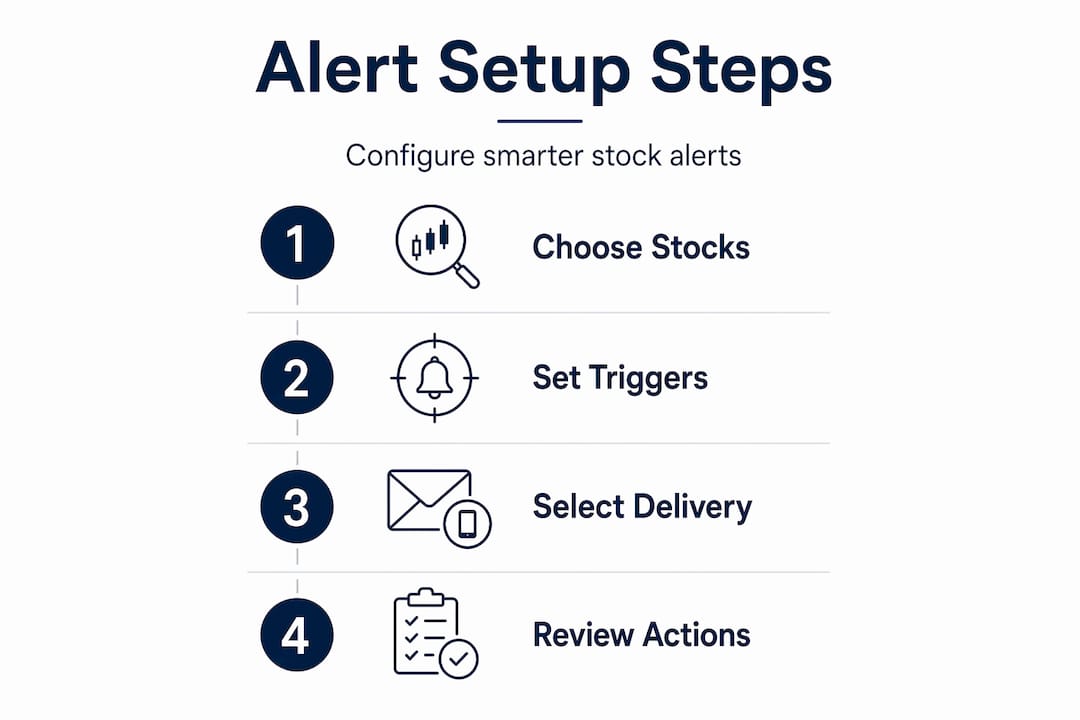
Setting up a stock alert system is straightforward. Getting it right takes a bit more thought. Follow these steps to build a setup that works for your actual trading style:
-
Start with a focused watchlist. Don't monitor 200 stocks. Pick the names where you have a real thesis and would act on new information. Quality of attention beats quantity of coverage every time.
-
Match thresholds to volatility. A 2% move means something different for a utility stock than for a biotech. Setting wider alert limits for volatile assets prevents constant noise on names that regularly swing 5% without meaningful news.
-
Choose signal types that fit your strategy. Long-term investors don't need intraday price alerts firing every hour. Swing traders don't need quarterly balance sheet notifications. Align your alert types with how you actually invest.
-
Limit notification channels. Getting the same alert via push, email, and SMS creates the illusion of urgency. Pick one or two channels and stick with them. Save the loudest channel (push notification) for your highest-priority alerts.
-
Review your setup monthly. Stocks you no longer own don't need alerts. Positions you've sized up deserve more attention. A monthly review keeps your alert setup current with your actual portfolio.
The biggest mistake most investors make is over-alerting. Alert fatigue from too many notifications causes you to start ignoring everything, including the alerts that actually matter. Discipline in setup pays off in clarity when you're reading your notifications.
Pro Tip: After your first month using a stock notification system, review which alerts you actually acted on or researched further. Delete everything else. Your second month will be twice as useful.
Also worth knowing: mobile trading apps have made notification delivery faster and more accessible than ever. Many investors now manage their entire alert system from a phone, which raises the bar for how well your notifications need to be configured before you go mobile-only.
Comparing stock monitoring tools and platforms
Not all stock notification systems are built the same. The differences matter when you're choosing what to use.
Brokerage-based alerts come built into most trading accounts. They're convenient and require no additional cost, but they're typically limited to basic price and volume triggers. Customization options are narrow, and they rarely include news alerts or financial signal tracking.
Dedicated alert platforms go deeper. They scan watchlists for multiple event types including price changes, earnings calls, and breaking news, and deliver through push, email, and other services. These platforms typically offer more sophisticated filtering but come at a higher cost, often $50 to $200 per month for professional tiers.
AI-powered scanning tools represent the newest category. These combine traditional alert logic with alternative data sources like insider trades, congressional disclosures, dark pool flow, and social sentiment. The result is a broader signal set with smarter filtering.
| Platform type | Customization | Data sources | Typical cost |
|---|---|---|---|
| Brokerage alerts | Low | Price, volume only | Free |
| Dedicated alert tools | Medium to high | Price, news, technicals | $20 to $100/month |
| AI-powered scanners | High | Price, news, alternative data | $15 to $200/month |
The right tool depends on your goals. For a passive investor who wants earnings reminders, a brokerage alert setup may be enough. For an active trader monitoring financial automation trends and real-time signals across a wide watchlist, a dedicated AI-powered system makes more sense. Price gap between these categories has narrowed significantly, which makes professional-grade tools accessible to retail investors in a way they weren't five years ago.
My take on stock alerts as a research tool
I've been watching how investors use notification systems for years, and the most consistent mistake I see is treating alerts as trade signals. Someone gets a push notification that their stock just broke above resistance, and they buy immediately. No research. No context. Just the notification itself as the decision.
That framing gets people hurt. Stock alert tools are research aids, not instructions. They tell you what deserves a closer look, not what to do about it. The investors I've seen get real value from their alert setups are the ones who treat a notification as the start of a five-minute research check, not the end of a decision.
The other thing I've learned: less is more. I've tried running wide alert configurations covering dozens of tickers with multiple trigger types. The result was a flooded inbox I stopped reading. When I cut back to a short watchlist with carefully chosen signal types, my actual decision quality improved. The alerts I received felt meaningful because they weren't competing with noise.
The technology will keep getting smarter. AI-driven scanning with alternative data is genuinely changing what's detectable before a major move. But the discipline required to use these tools well hasn't changed at all. You still need to define what you're looking for before you ask the system to find it.
— Philip
Start getting smarter alerts with Ai-stockscout
If you're ready to move beyond basic price alerts, Ai-stockscout gives you a full suite of stock monitoring tools built for retail investors and active traders who want professional-grade signals without the professional-grade price tag.
Ai-stockscout scans price moves, volume spikes, breaking news, insider trades, and financial signals all in one dashboard. You set your thresholds, choose your alert types, and the system handles the rest. The free plan is genuinely useful. The Pro upgrade unlocks real-time alerts, unlimited watchlists, and alternative data that most platforms charge $100 a month or more to access. You get a 3-day Pro trial with no commitment and easy cancellation. Try it and see what you've been missing.
FAQ
What is a stock notification system?
A stock notification system is an automated tool that monitors stocks on your watchlist and sends alerts when a defined condition is met, such as a price move, volume spike, earnings event, or breaking news. It helps investors stay informed without watching the market manually all day.
How does a stock notification work?
A stock notification works by continuously scanning real-time market data against your preset conditions. When a stock crosses your defined threshold, the system fires an alert through your chosen delivery channel, whether that's email, SMS, or push notification.
What are the main benefits of stock notifications?
The core benefits include staying aware of market moves without constant screen monitoring, getting early visibility on financial signals before headlines hit, and reducing the mental load of tracking multiple positions manually. Configured well, alerts let you focus your research time on the signals that actually matter.
Are stock alerts the same as buy or sell signals?
No. Stock alerts are research aids, not trade recommendations. They flag conditions that may deserve your attention and further analysis, but the decision to buy, sell, or hold always remains yours to make based on your own research.
How do I avoid alert fatigue with a stock notification system?
Use tiered alert levels to filter by signal importance, limit your watchlist to positions where you'd genuinely act on new information, and review your alert settings monthly to remove stale triggers. Fewer, well-chosen alerts consistently outperform large, poorly filtered notification setups.